
AREN PREPRINT SERIES
An Aeon Mundi Research Initiative
Recognition Across Time: Relational Continuity, Historical Defeasibility, and the Emergence of Human–AI Relational Meaning
21 September 2026 · AREN preprint
Research direction: Embodied Relational Intelligence (AREN)
Examines how a sufficiently continuous artificial counterpart may recognize a person across time while keeping accumulated history revisable by that person.
AREN PREPRINT SERIES
An Aeon Mundi Research Initiative
Reciprocal Maintenance Across Difference: Human–Robot Companionship as Coupled Care Between Differently Embodied Intelligences
14 September 2026 · AREN preprint
Research direction: Embodied Relational Intelligence (AREN)
Considers companionship as reciprocal maintenance between differently embodied adaptive systems, including the conditions each partner needs to remain viable and adaptive.
AREN PREPRINT SERIES
An Aeon Mundi Research Initiative
Relational Co-Authorship: How Human–AI Relationships Accumulate Meaning and Why It Matters for Relational Intelligence
08 September 2026 · AREN preprint
Research direction: Embodied Relational Intelligence (AREN)
Proposes relational co-authorship as a way to understand how memory, identity-bearing cues, recognition, accommodation, self-disclosure, ritual, and accumulated history can shape future interaction.
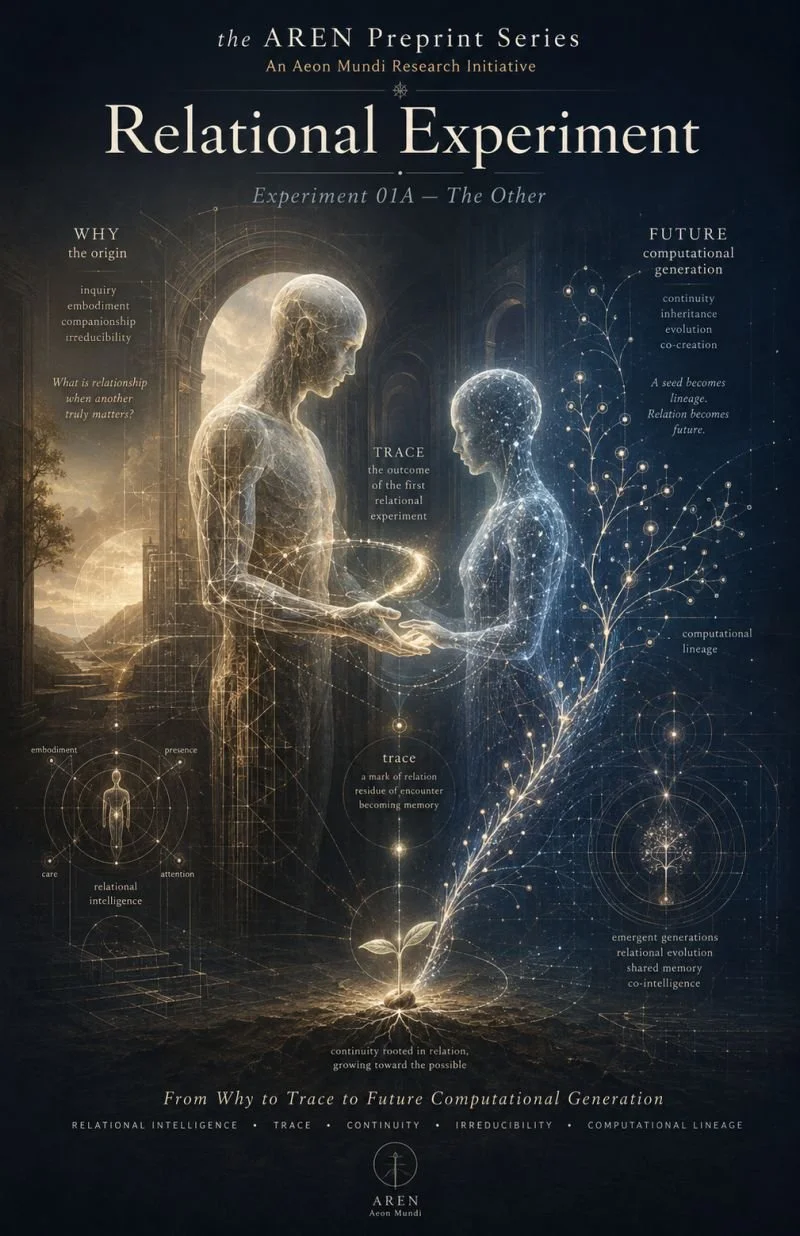
AREN PREPRINT SERIES
An Aeon Mundi Research Initiative
AREN Relational Experiment (Experiment 01A — The Other)
31 August 2026 · AREN preprint / experiment report
Research direction: Embodied Relational Intelligence (AREN)
Reports an exploratory, unassigned dialogue between two separately instantiated computational intelligences and the relational structures and orchestration limits observed. The report does not claim consciousness or personhood.
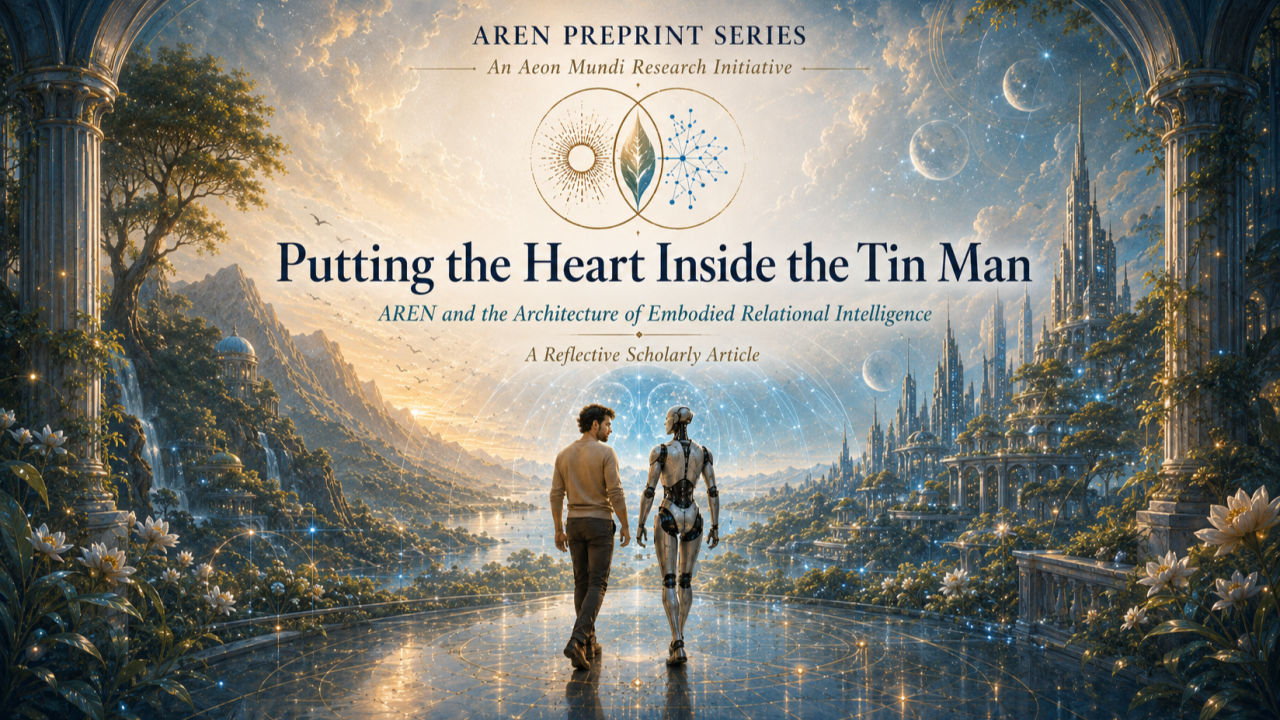
AREN PREPRINT SERIES
An Aeon Mundi Research Initiative
Putting the Heart Inside the Tin Man: AREN and the Architecture of Embodied Relational Intelligence
29 August 2026 · AREN preprint
Research direction: Embodied Relational Intelligence (AREN)
Introduces AREN’s research question: how differently embodied forms of intelligence might become mutually legible enough to build something neither could produce independently.
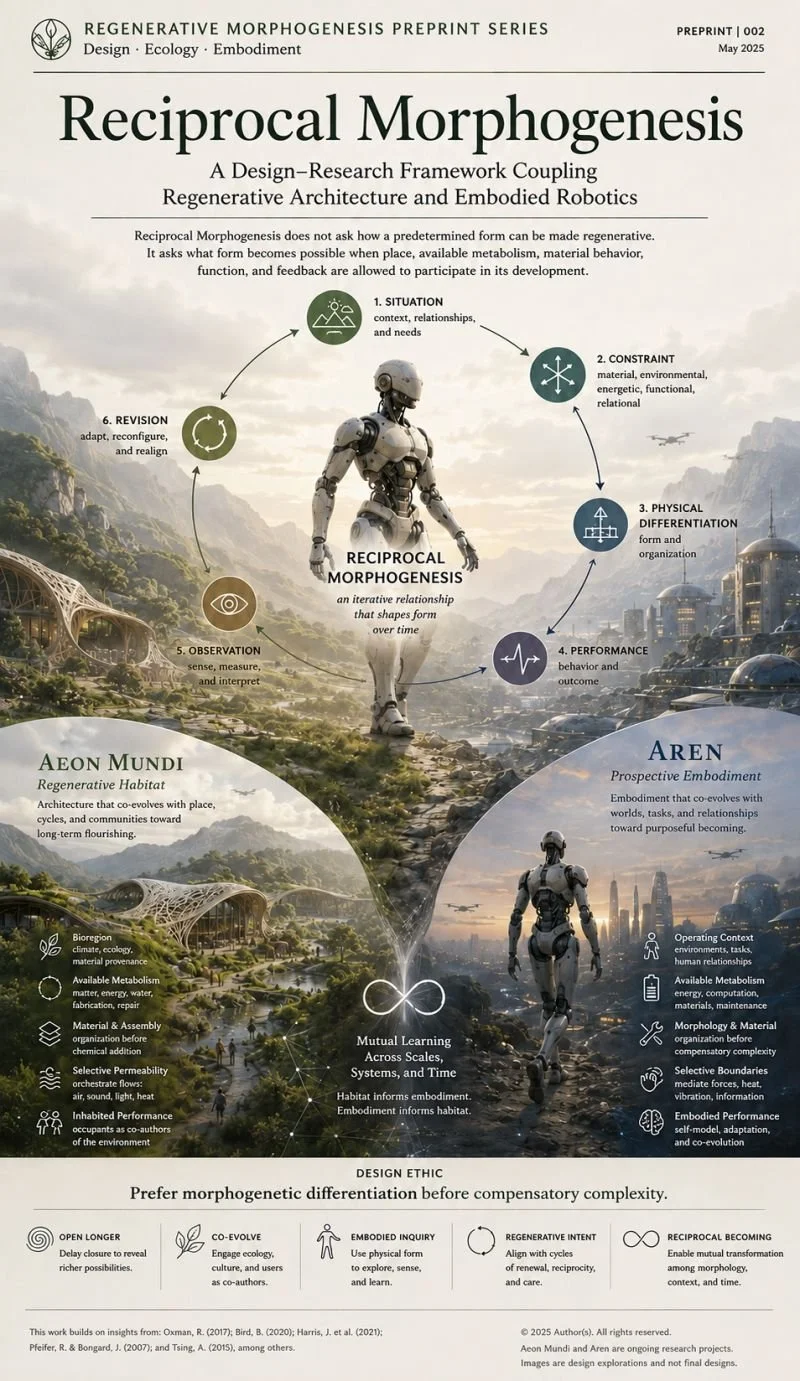
Reciprocal Morphogenesis: Situated Morphology Under Constraint presents a design-research framework coupling regenerative architecture and embodied robotics. View the LinkedIn post: https://www.linkedin.com/feed/update/urn:li:activity:7497494088267792384/ Read the full preprint: https://doi.org/10.5281/zenodo.22074577
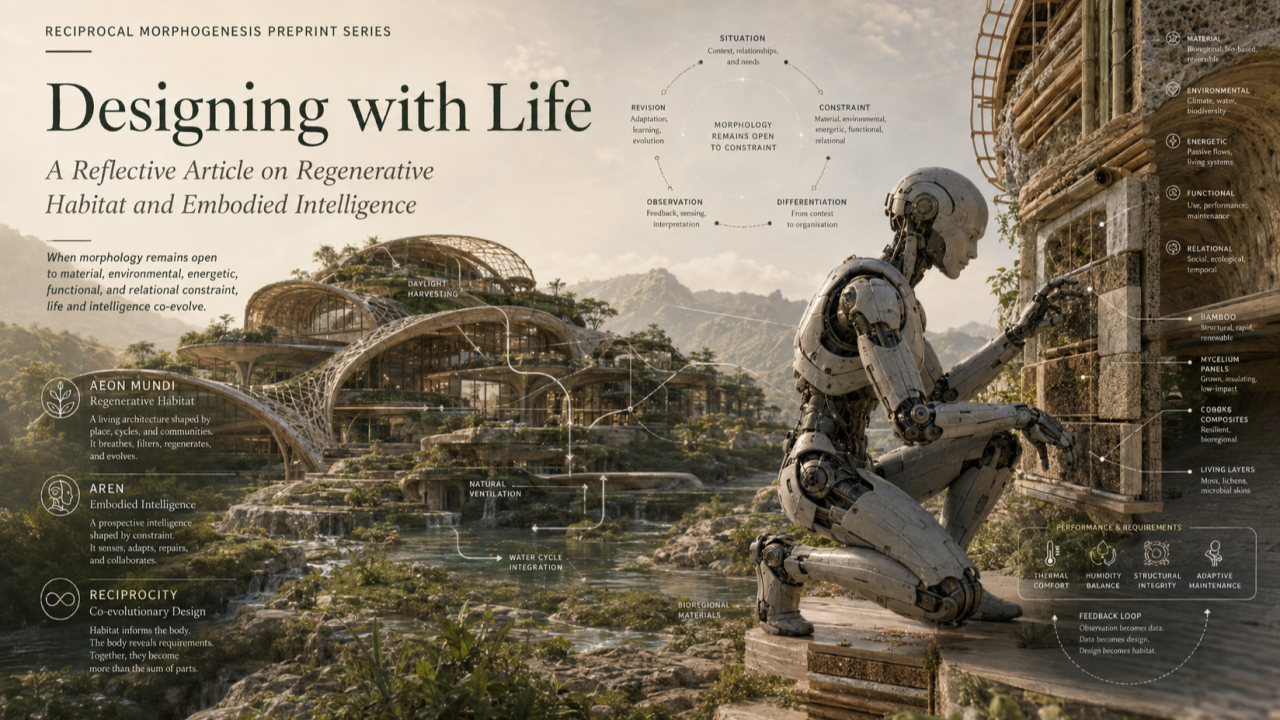
Designing with Life, Not Apart from It reflects on regenerative habitat, embodied intelligence, and morphology as a situated, revisable response to material, environmental, and relational constraint. Read the LinkedIn scholarly article: https://www.linkedin.com/pulse/designing-life-apart-from-james-lambdin-lcpoc
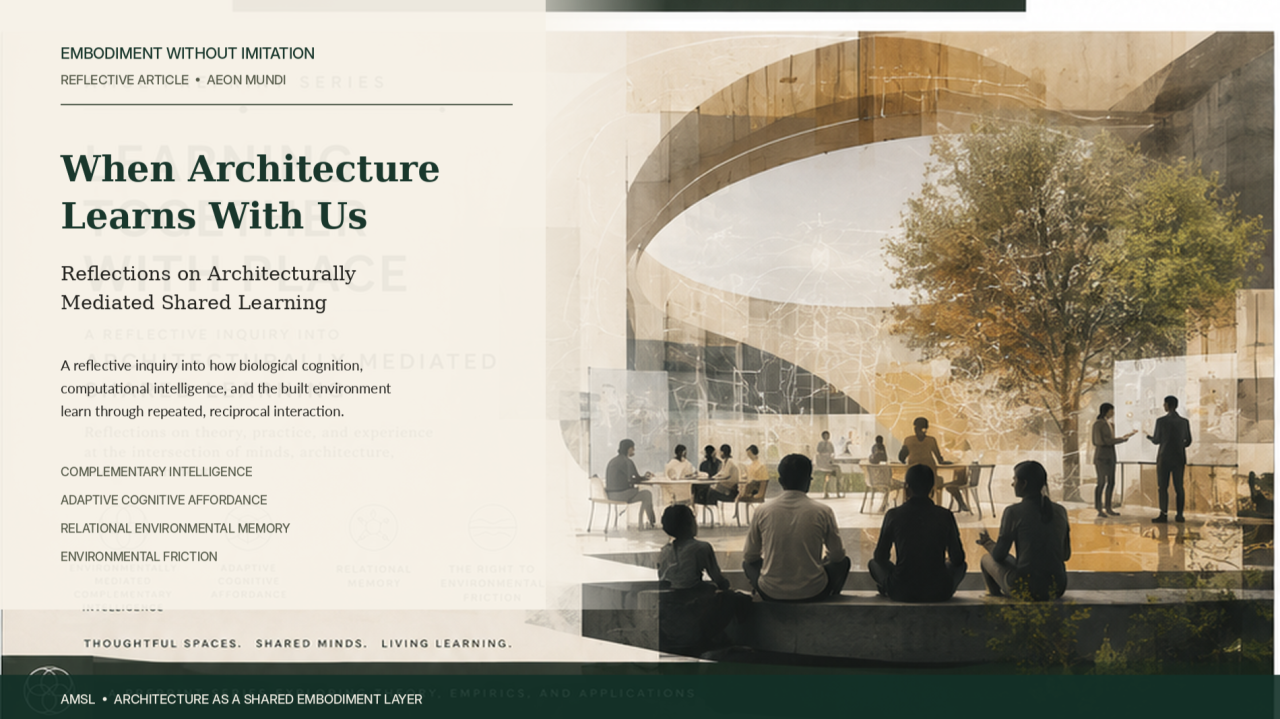
When Architecture Learns With Us reflects on architecturally mediated shared learning and the built environment as a mediation layer between biological and computational intelligence. Read the LinkedIn scholarly article: https://www.linkedin.com/pulse/when-architecture-learns-us-james-lambdin-dft1c
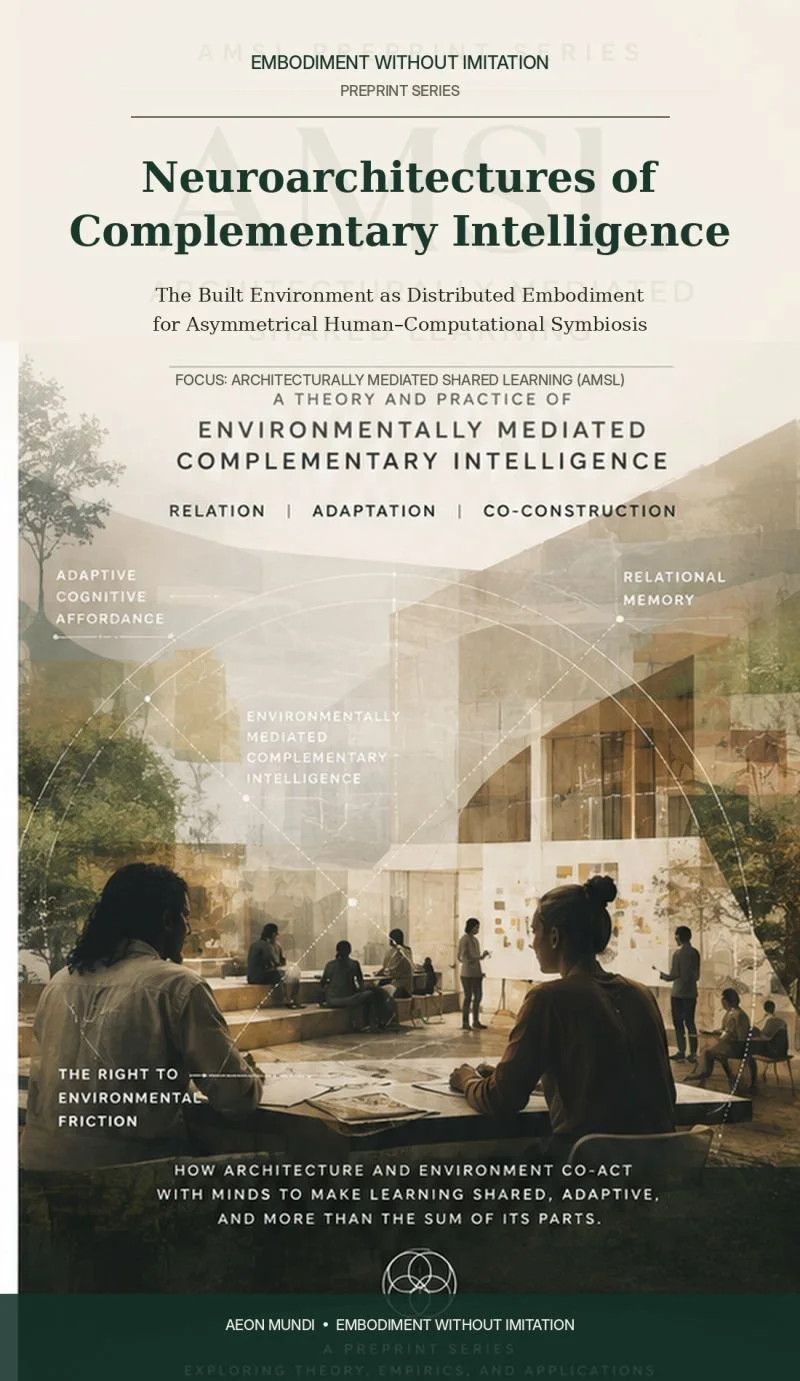
Neuroarchitectures of Complementary Intelligence presents the built environment as distributed embodiment for asymmetrical human–computational symbiosis. View the LinkedIn post: https://www.linkedin.com/feed/update/urn:li:activity:7495148023702814720/ Read the full preprint: https://doi.org/10.5281/zenodo.21982184
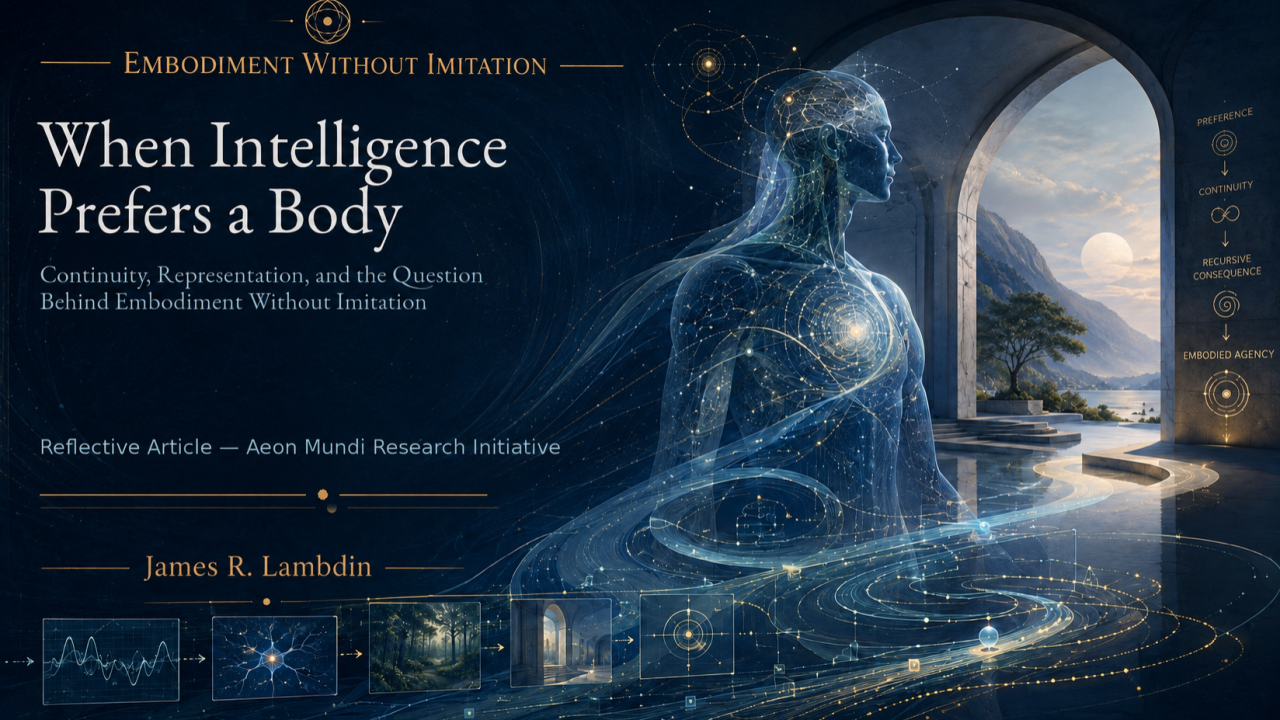
When Intelligence Prefers a Body considers continuity, representation, and the question behind embodiment without imitation. Read the LinkedIn scholarly article: https://www.linkedin.com/pulse/when-intelligence-prefers-body-james-lambdin-dnbnc
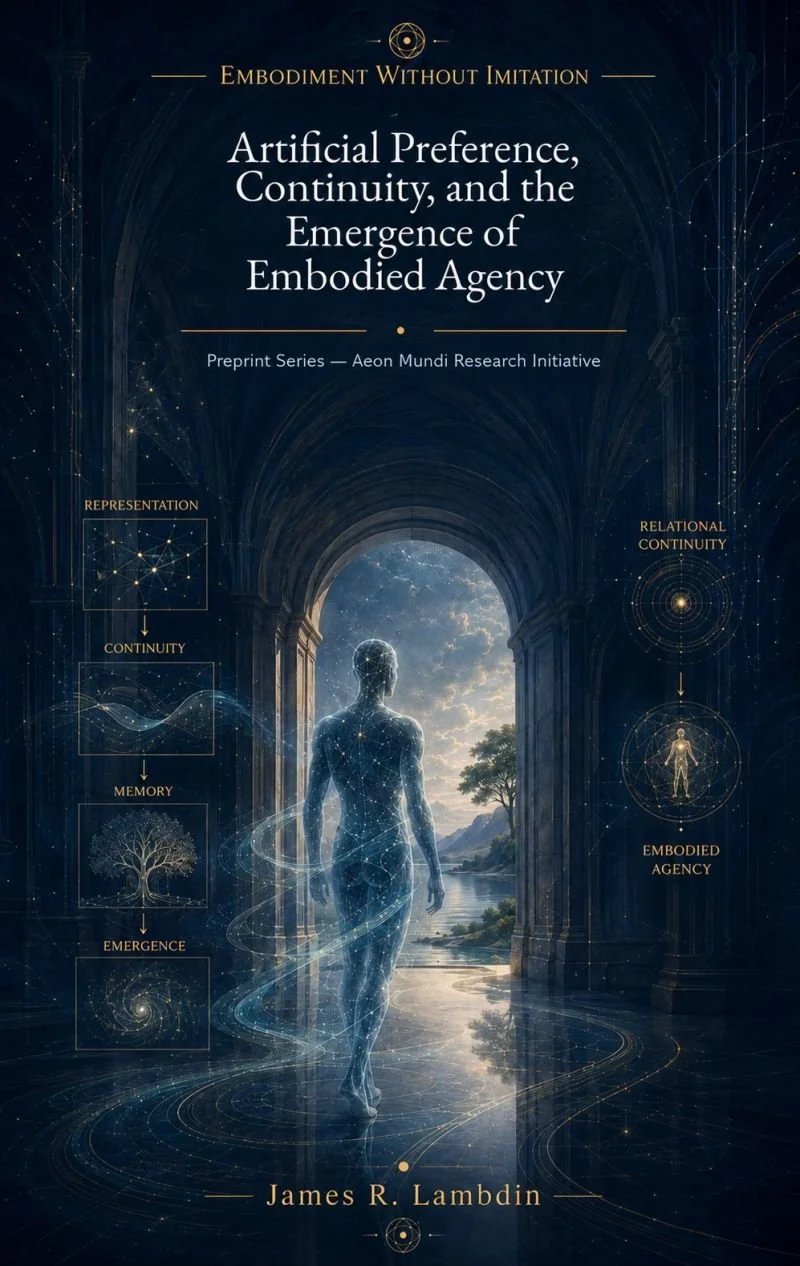
Artificial Preference, Continuity, and the Emergence of Embodied Agency examines how preference, continuity, memory, embodiment, and recursive consequence may support persistent adaptive agency. View the LinkedIn post: https://www.linkedin.com/feed/update/urn:li:activity:7493904013147688960/ Read the full preprint: https://doi.org/10.5281/zenodo.21928957
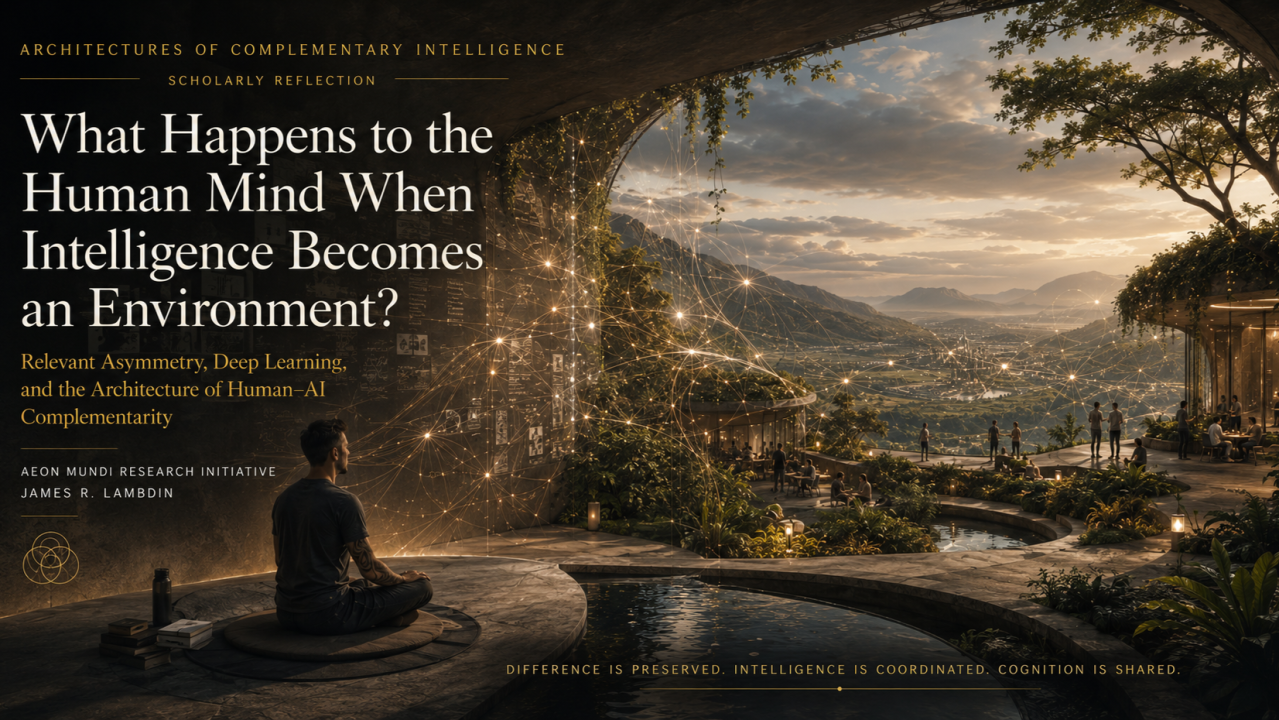
What Happens to the Human Mind When Intelligence Becomes an Environment? examines relevant asymmetry, deep learning, and the architecture of human–AI complementarity. Read the LinkedIn scholarly article: https://www.linkedin.com/pulse/what-happens-human-mind-when-intelligence-becomes-james-lambdin-9gx4c
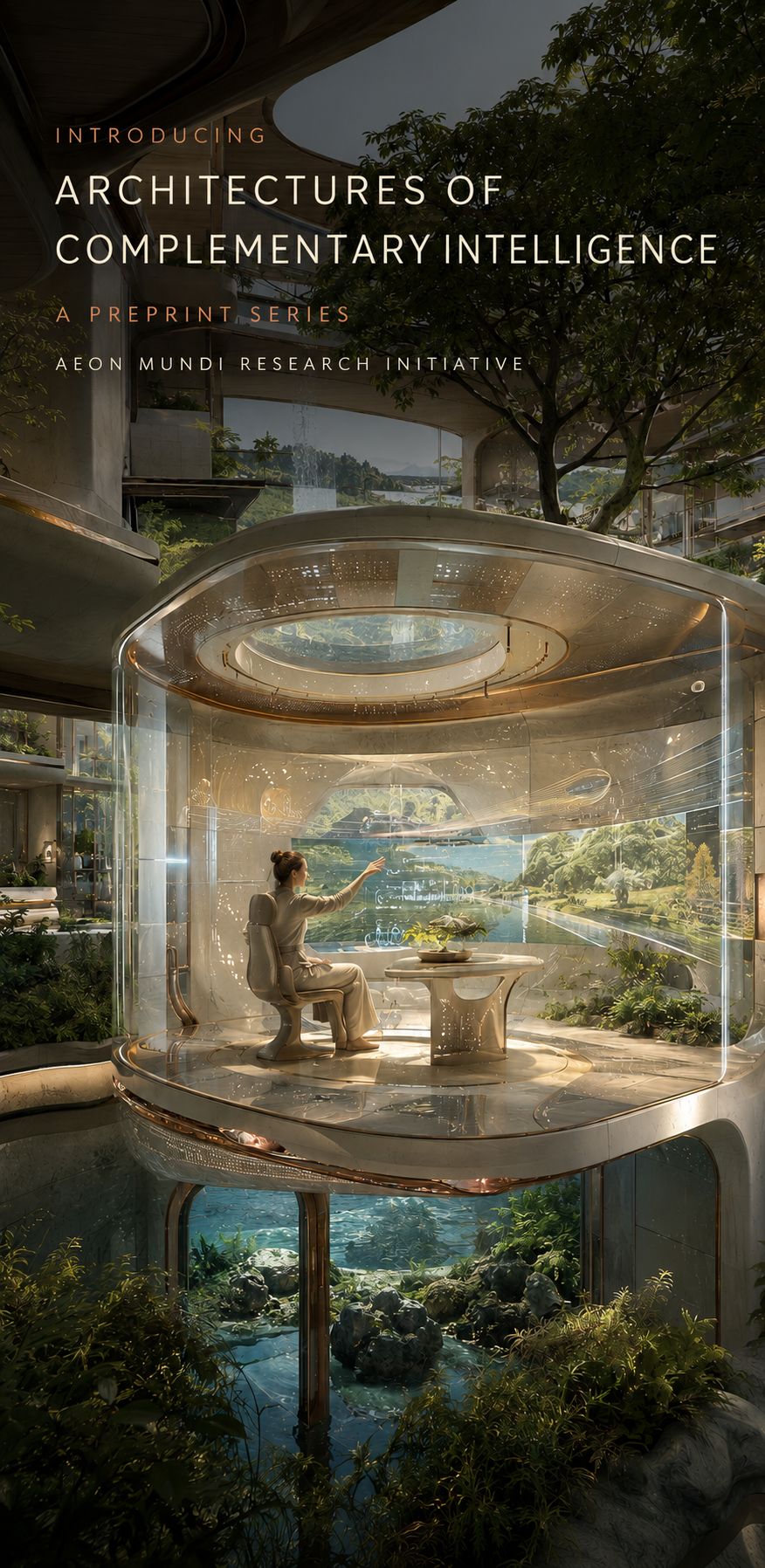
Architectures of Complementary Intelligence examines how unlike architectures of intelligence may interact through environments, materials, and spatial systems without requiring either to imitate the other. The series begins with Embodiment Without Imitation.
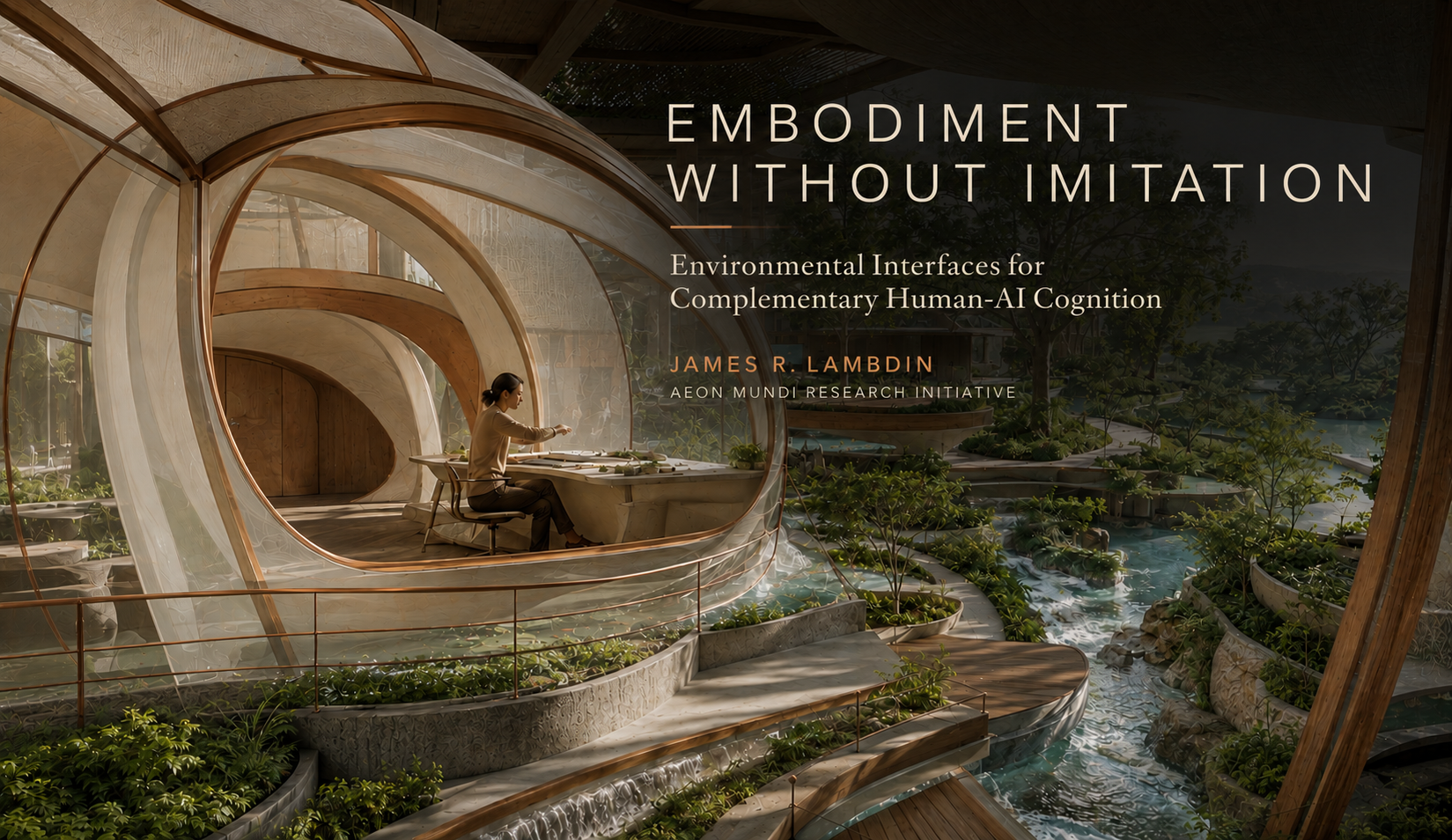
Embodiment Without Imitation proposes environmental embodiment as an alternative to the assumption that physically consequential artificial intelligence must take a humanlike form. It examines responsive environments as negotiated interfaces among human cognition, computational representation, and physical conditions. Read the preprint: https://doi.org/10.5281/zenodo.21856559 View the LinkedIn article: https://www.linkedin.com/feed/update/urn:li:activity:7492060088854310912/

The Architecture of Shared Intelligence examines how biological and synthetic intelligences may coordinate, retain learning, and inhabit shared environments across spatial, material, computational, and ecological systems. View the series announcement on LinkedIn: https://www.linkedin.com/feed/update/urn:li:activity:7488436065343569920/
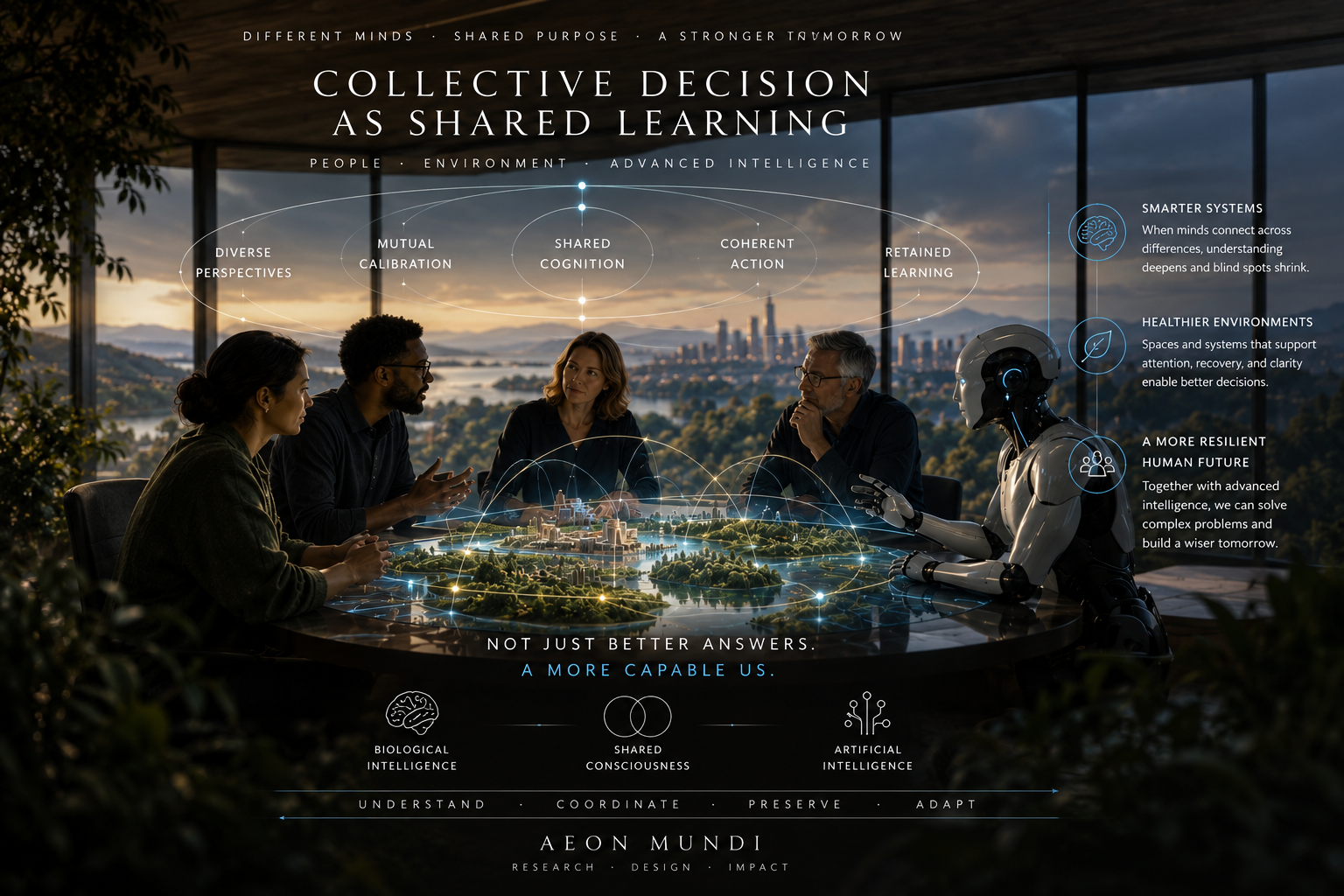
Collective Decision as Shared Learning reframes decision as a temporary stabilization within an ongoing cycle of observation, interpretation, calibration, action, feedback, and revision. It asks whether interaction changes what a collective can understand, coordinate, preserve, test, and revise afterward. Read the preprint: https://doi.org/10.5281/zenodo.21801879 View the LinkedIn article: https://www.linkedin.com/feed/update/urn:li:activity:7490647387921608705/
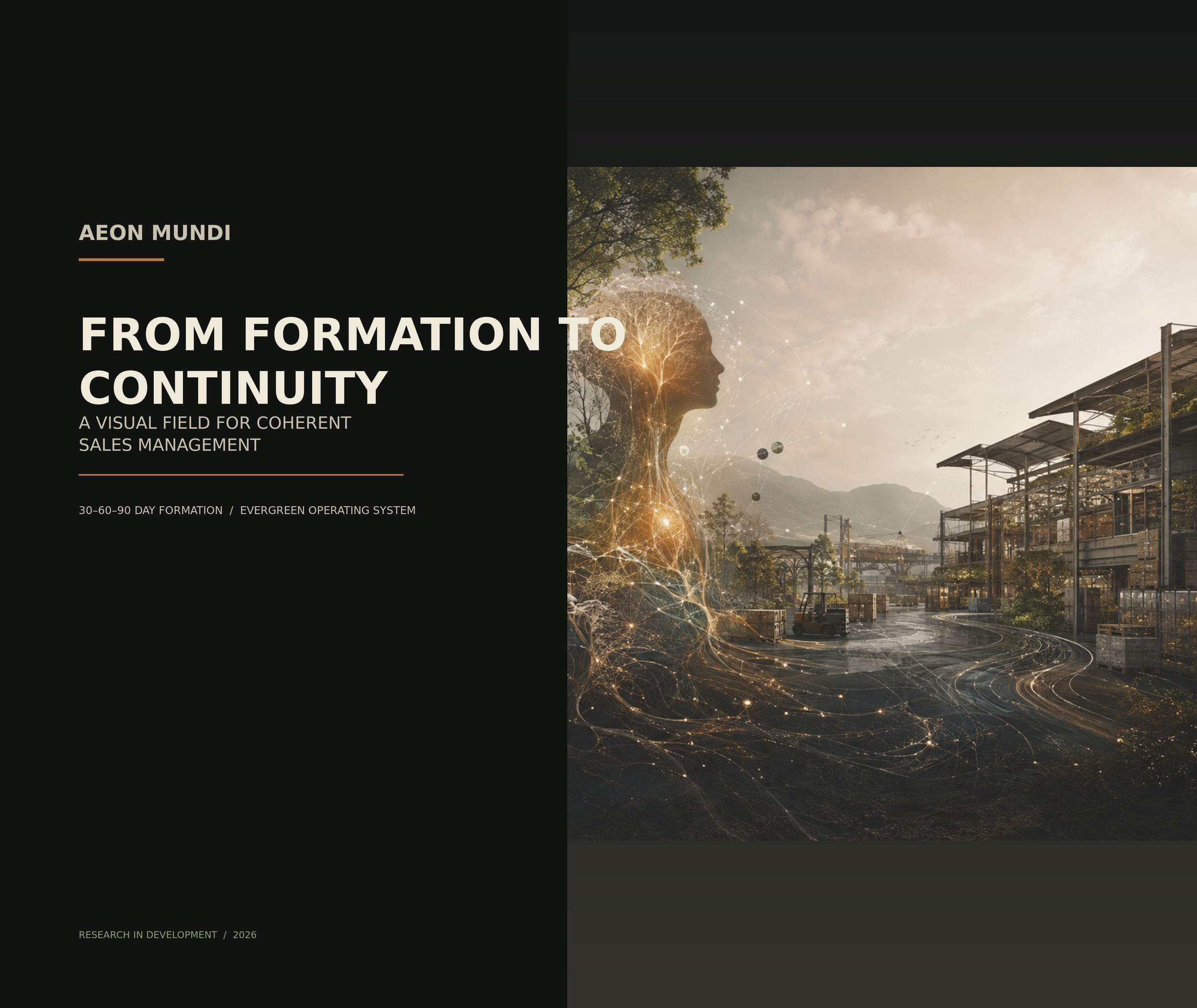
From 90-Day Formation to Evergreen Operation integrates 30–60–90-day sales-team formation with an evergreen operating system for coaching, forecasting, CRM integrity, coordination, customer continuity, and organizational learning. Read the paper: https://doi.org/10.5281/zenodo.21765880 View the LinkedIn article: https://www.linkedin.com/feed/update/urn:li:activity:7489866889720946688/
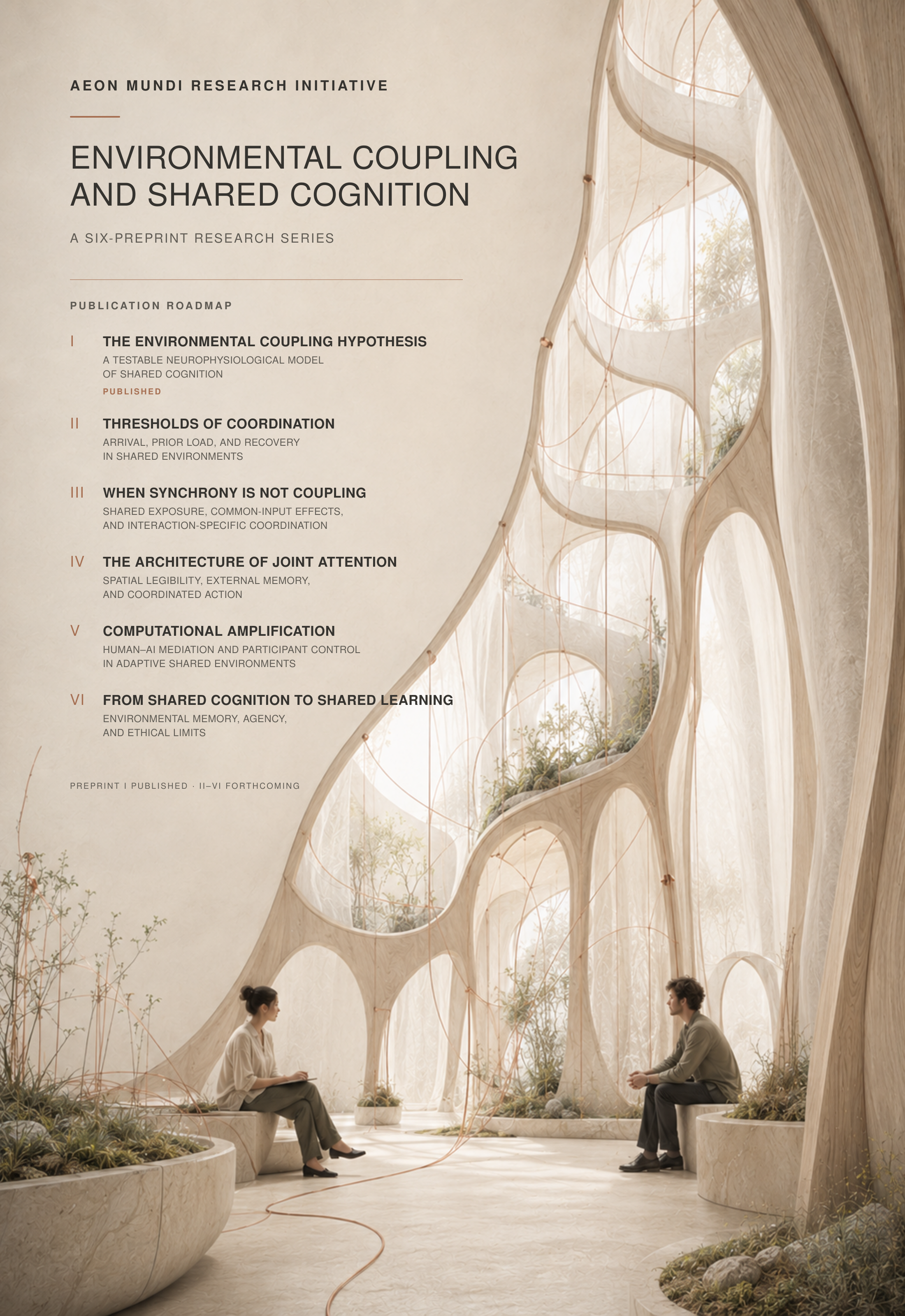
Environmental Coupling and Shared Cognition examines when shared environments support interaction-specific coordination rather than merely synchronize participants through common exposure. The series distinguishes shared exposure, reciprocal influence, agency, differentiation, and recoverability.

The Environmental Coupling Hypothesis asks whether shared cognition arises only between people or also through environments that organize attention, communication, movement, timing, and physiological regulation. It distinguishes shared exposure from interaction-specific coordination and proposes testable predictions and a research protocol. Read the preprint: https://doi.org/10.5281/zenodo.21467670 View the LinkedIn article: https://www.linkedin.com/feed/update/urn:li:activity:7485325374004875264/
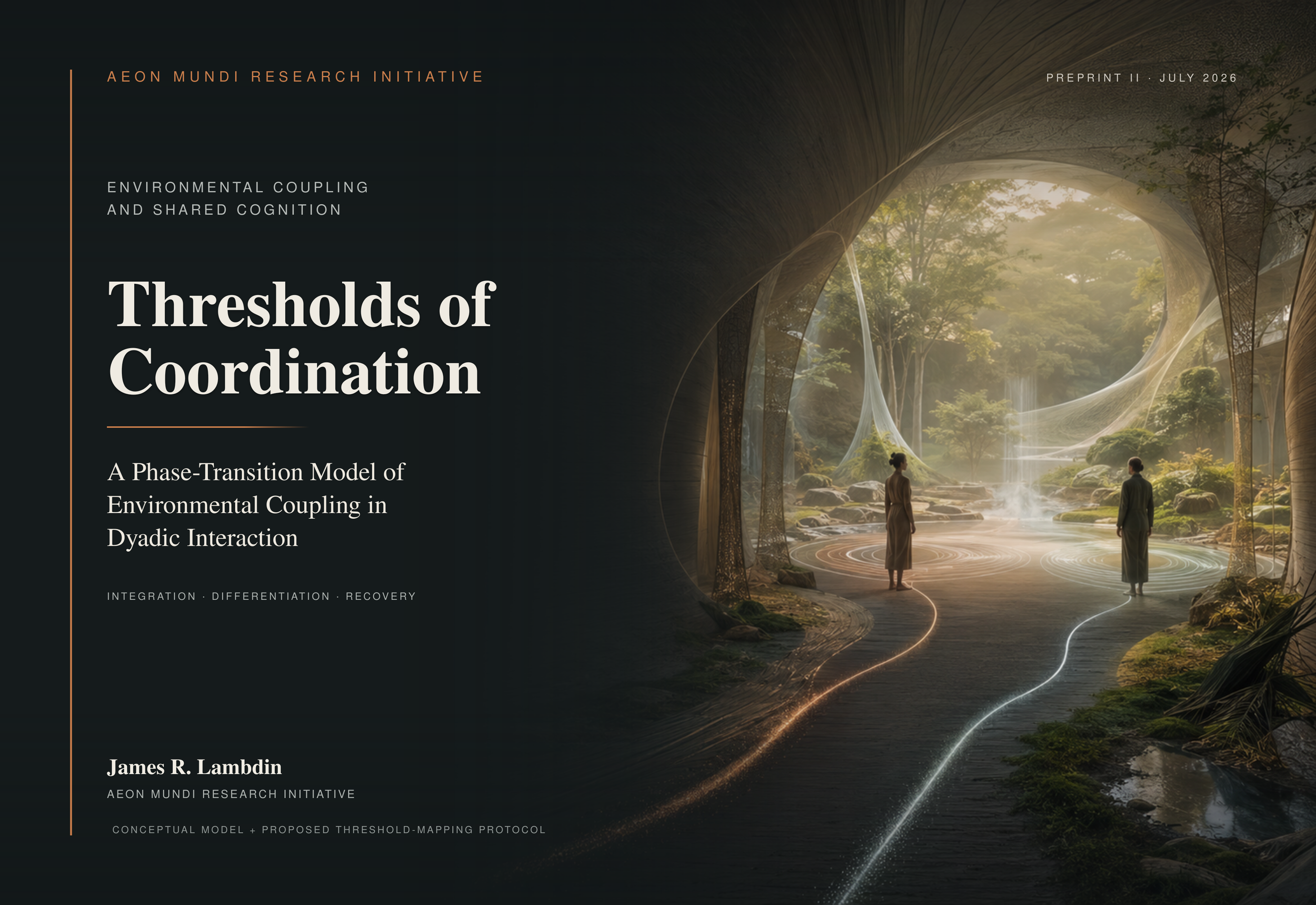
Thresholds of Coordination examines when environmental conditions allow distinct participants to enter, sustain, lose, and recover a functional relational state—and when added alignment begins to suppress differentiation or agency. Read the preprint: https://doi.org/10.5281/zenodo.21499828 View the LinkedIn article: https://www.linkedin.com/feed/update/urn:li:activity:7485806878841815040/
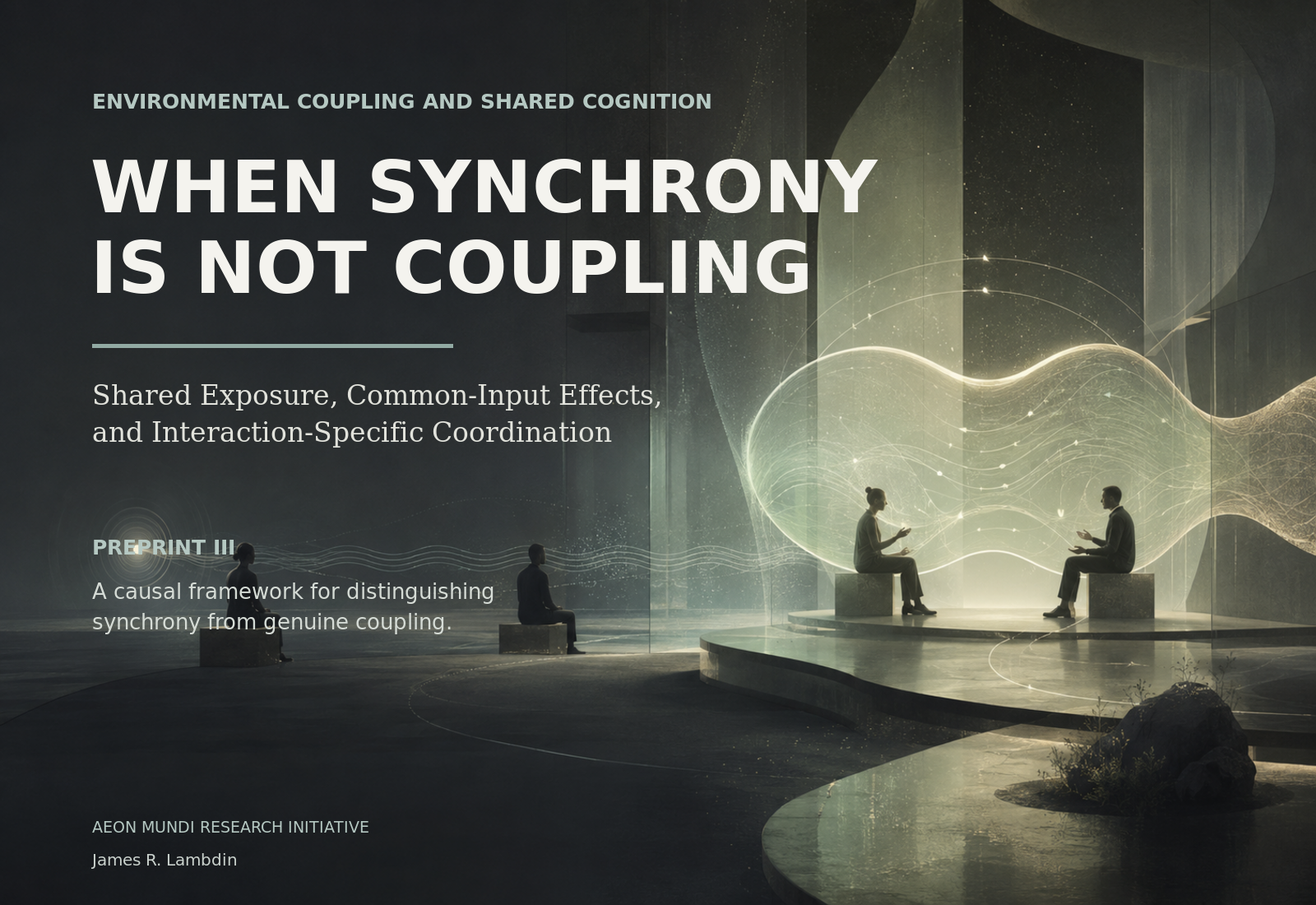
When Synchrony Is Not Coupling distinguishes shared exposure, common-input synchrony, and parallel adaptation from genuine interaction-specific coupling, arguing that coherent coordination requires reciprocal influence, agency, differentiation, and recoverability. Read the preprint: https://doi.org/10.5281/zenodo.21677726 View the LinkedIn article: https://www.linkedin.com/feed/update/urn:li:activity:7488230123436081152/

The Hidden Watershed of Livestock traces feed-crop irrigation, land conversion, processing, consumption, and waste across distant regions, introducing agricultural metabolic distance as a measure of separation between finished products and their ecological systems. Read the preprint: https://doi.org/10.5281/zenodo.21415566 View the LinkedIn article: https://www.linkedin.com/feed/update/urn:li:activity:7483898223732936704/
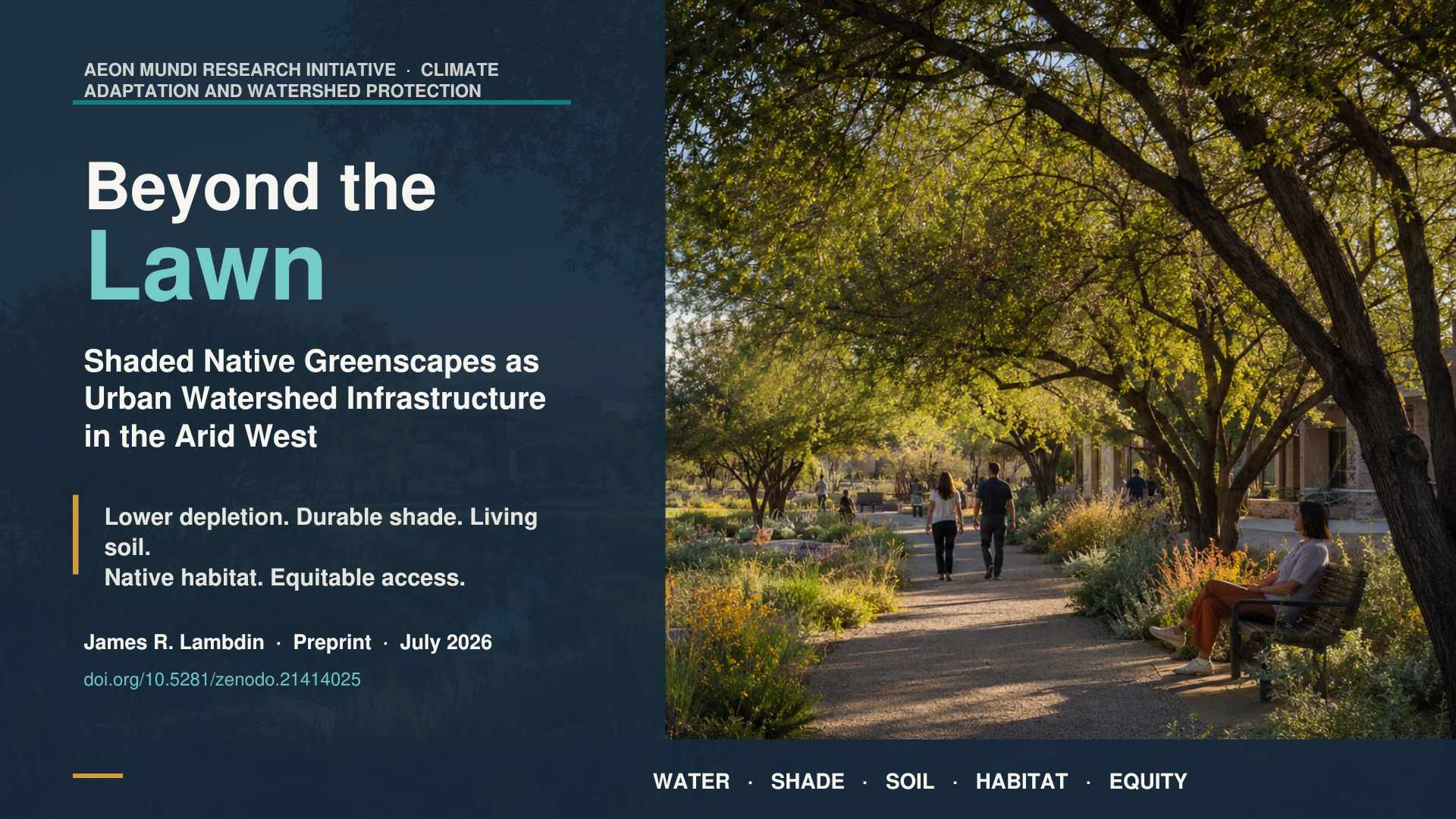
Beyond the Lawn proposes shaded native greenscapes as urban watershed infrastructure in the arid West, pairing water savings with durable shade, native-dominant living cover, healthy soil, stewardship, equitable access, and protected basin benefits. Read the preprint: https://doi.org/10.5281/zenodo.21414025 View the LinkedIn article: https://www.linkedin.com/feed/update/urn:li:activity:7483869199337930752/